Bhool Chuk Maaf (2025) Movie Review: Rajkummar Rao’s Time-Loop Comedy That’s Stuck Between Charm and Clichés
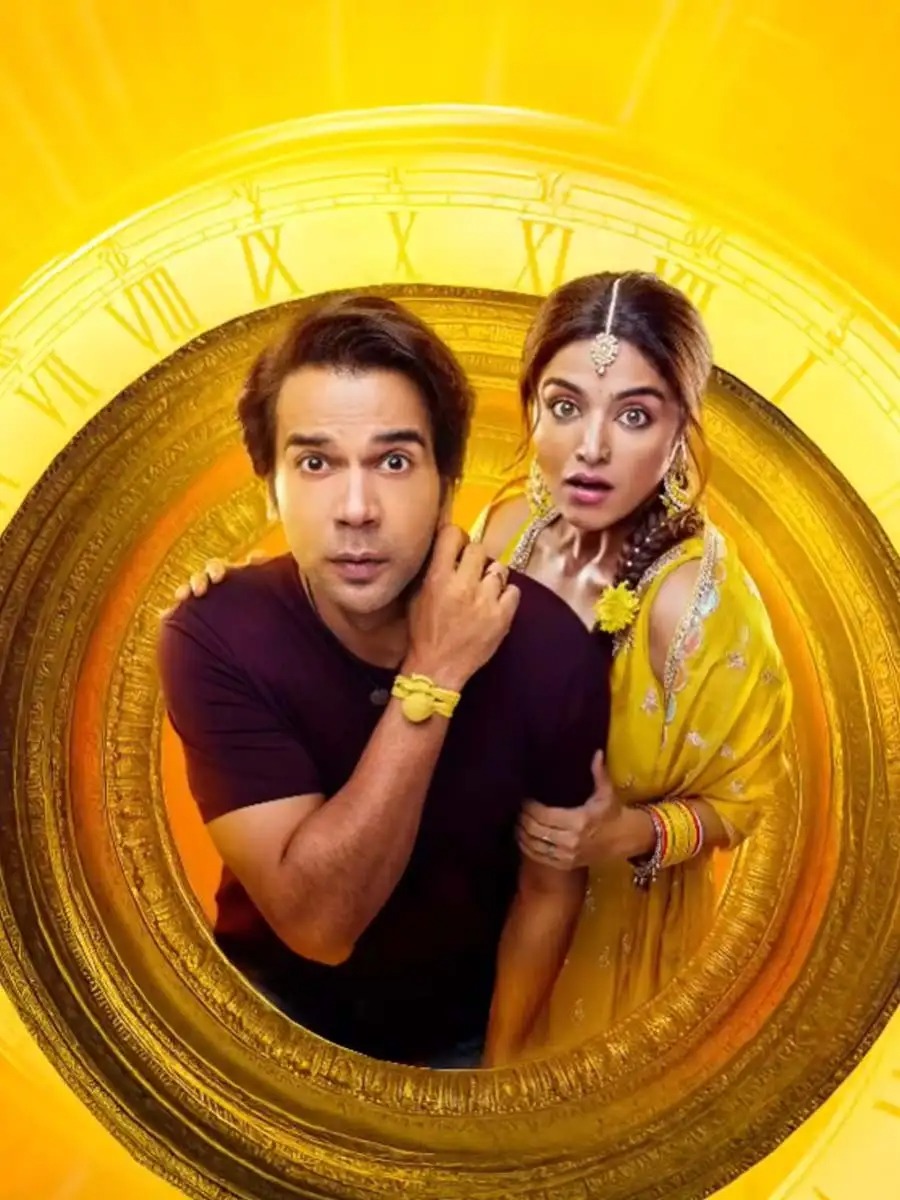
Bhool Chuk Maaf, directed by Karan Sharma and released on May 23, 2025, brings the popular time-loop concept to the vibrant ghats of Varanasi. Produced by Dinesh Vijan’s successful Maddock Films banner in association with Amazon MGM Studios, this fantasy romantic comedy stars Rajkummar Rao and Wamiqa Gabbi in lead roles, supported by veteran actors Sanjay Mishra, Seema Pahwa, and Raghubir Yadav.
The film follows Ranjan Tiwari, a groom-to-be who finds himself trapped in a temporal loop, repeatedly living the day before his wedding. To escape this supernatural predicament, he must fulfill a forgotten promise and perform a genuine good deed. While the premise promises fresh entertainment, the execution walks a familiar path that Bollywood’s small-town heroes have traveled many times before.
Set against the cultural richness of Varanasi with its ancient temples and bustling ghats, Bhool Chuk Maaf attempts to blend magical realism with social commentary about government job obsession, compassion, and moral values in contemporary Indian society.
Plot Overview: When Wedding Day Keeps Repeating
The narrative centers on Ranjan Tripathi, a young man from Lucknow living with his parents and sister. He’s deeply in love with Titli, a local girl whose father, Brijmohan Mishra, refuses to approve their marriage unless Ranjan secures a government job within two months—a reflection of middle-class Indian families’ obsession with job security.
Desperate to marry his beloved, Ranjan resorts to bribing a man named Bhagwan to illegally obtain a position in the irrigation department. In his desperation, he makes a vow to perform a good deed if successful, a promise he quickly forgets once employed.
The Time Loop Begins
On May 29, the day of his haldi ceremony, everything proceeds smoothly. But when Ranjan wakes up the next morning expecting his wedding day, he discovers he’s reliving May 29 again. Confused and bewildered, he realizes he’s trapped in a time loop where the same day repeats endlessly.
The supernatural curse forces Ranjan to confront his broken promise. To break free from this temporal prison and finally reach his wedding day on May 30, he must discover what good deed he promised to perform and fulfill it genuinely—not just to escape, but with true compassion and selflessness.
The film explores whether Ranjan can overcome his self-centered nature, recognize what truly matters, and perform an act of genuine kindness before time runs out permanently.
Cast Performances: Familiar Faces in Familiar Roles
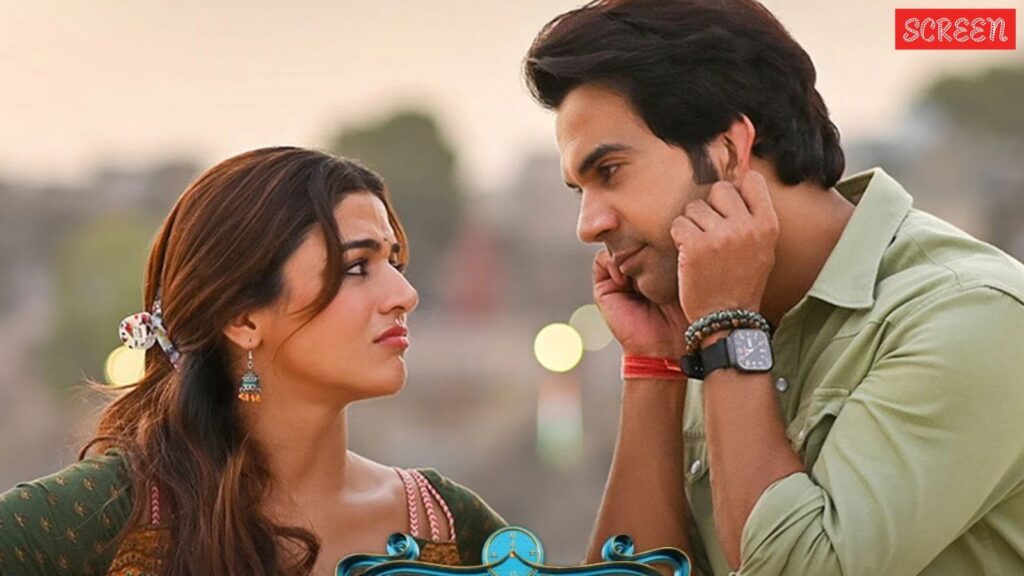
Rajkummar Rao as Ranjan Tripathi
Rajkummar Rao delivers exactly what’s expected from him at this point in his career—the lovable small-town layabout character he has perfected over the past several years. Critics noted that Rao has played versions of the same person in recent films: a small town character whose uselessness is inexplicably presented as innocent charm.
While Rao brings his trademark comic timing and natural screen presence to Ranjan, there’s a growing sense of déjà vu watching him navigate yet another similar role. His performance is competent and engaging, but lacks the freshness that made his earlier small-town characters memorable. The actor clearly understands this character type intimately, but that very familiarity becomes a limitation.
Wamiqa Gabbi as Titli
Wamiqa Gabbi emerges as the film’s clear standout performer, bringing nuance and freshness to what could have been a stereotypical small-town bride role. Critics universally praised her performance, noting she brings depth to an otherwise uneven film. Her chemistry with Rao works well, and she manages to create a believable character despite limited screenplay support.
Gabbi’s Titli represents the modern Indian woman balancing tradition with personal agency, and the actress handles this duality with grace and conviction. Her presence elevates scenes that might otherwise feel routine.
Supporting Cast Excellence
Sanjay Mishra, Seema Pahwa, and Raghubir Yadav bring their considerable experience to the family dynamics, creating authentic moments that capture middle-class Indian household tensions and warmth. Seema Pahwa as Ranjan’s mother particularly shines in scenes exploring maternal concern and family expectations.
Zakir Hussain as Titli’s father effectively portrays the stern father figure obsessed with his daughter marrying someone with a secure government position, representing a mindset still prevalent in many Indian families.
The ensemble cast works well together, creating believable family dynamics that ground the fantastical premise in relatable reality.
Technical Aspects: Varanasi Becomes a Character
Direction and Screenplay
Writer-director Karan Sharma makes his directorial debut with mixed results. The screenplay attempts to balance comedy, romance, fantasy elements, and social commentary, but struggles to maintain consistent tone throughout. Critics noted the film tries to be a comedy, flirts with a social message, and ends up being the cinematic equivalent of a WhatsApp forward—familiar, repetitive, and mildly amusing at best.
The time-loop concept is handled competently, with clear rules established for how the repetition works. However, the social messaging becomes heavy-handed in the final act, with monologues that feel preachy rather than organic to the narrative.
Cinematography and Production Design
The film’s strongest technical achievement lies in its gorgeous cinematography capturing Varanasi’s essence. The ancient ghats, winding lanes, colorful markets, and spiritual atmosphere are beautifully framed, making the city feel integral to the story rather than just a backdrop.
The production design authentically recreates middle-class Indian wedding preparations, from haldi ceremonies to family gatherings, with attention to cultural details that add credibility.
Music and Soundtrack
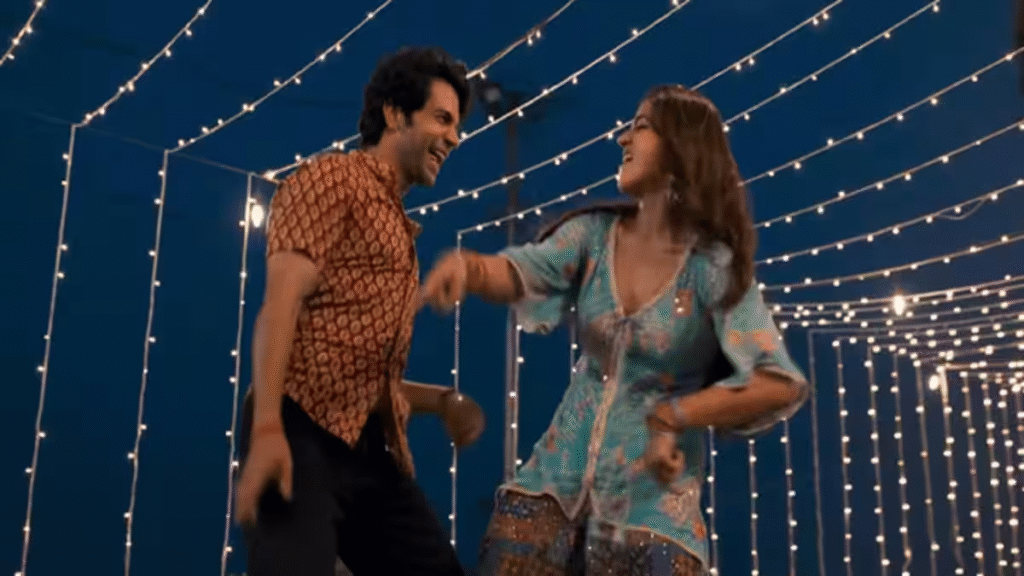
The soundtrack by Tanishk Bagchi and Gifty Mehra features catchy numbers including “Ting Ling Sajna” and “Chor Bazari Phir Se,” which became popular among audiences. The songs fit naturally into the wedding celebration context without disrupting narrative flow significantly.
The background score appropriately supports the magical realism elements, though it doesn’t elevate scenes beyond their scripted limitations. The music department delivers solid, commercially viable work without attempting anything particularly innovative.
Pros: What Makes Bhool Chuk Maaf Worth Watching
Fresh Time-Loop Concept for Bollywood: While familiar to international audiences, the time-loop device remains relatively unexplored in Hindi cinema, offering novelty for viewers unfamiliar with films like Groundhog Day.
Wamiqa Gabbi’s Breakthrough Performance: Her nuanced acting brings depth and authenticity to the film, showcasing an actress capable of elevating material beyond its limitations.
Beautiful Varanasi Cinematography: The film captures the holy city with respect and visual splendor, making viewers feel transported to its ghats and lanes.
Strong Supporting Cast: Veteran actors Sanjay Mishra, Seema Pahwa, and Raghubir Yadav bring gravitas and authentic flavor to family dynamics.
Catchy Musical Numbers: The soundtrack delivers commercially appealing songs that enhance the wedding celebration atmosphere.
Family-Friendly Entertainment: The film offers clean, wholesome content suitable for viewing with all age groups, making it ideal for family gatherings.
Well-Intentioned Social Message: The film addresses genuine issues like government job obsession and the importance of compassion in society, even if execution becomes preachy.
Quick OTT Release: The film’s rapid arrival on Amazon Prime Video (within two weeks) makes it easily accessible for home viewing.

Cons: Where the Film Gets Stuck in Its Own Loop
Repetitive Rajkummar Rao Typecasting: The actor plays yet another version of the small-town character he has portrayed countless times, creating audience fatigue with the similarity.
Predictable Social Commentary: The film concludes with the same old social commentary monologue that Ayushmann Khurrana and Rajkummar Rao have been delivering for a decade, lacking originality in its messaging approach.
Sluggish First Half: The first half feels sluggish and at times confusing, taking considerable time to find the right tone, testing viewer patience before the story gains momentum.
Hit-or-Miss Comedy: The humor lands inconsistently, with some jokes working well while others fall completely flat, creating uneven entertainment value.
Weak Overall Story: Critics noted the story is weak with no real thrill or engagement, and the ending twist wasn’t particularly impactful.
Mediocre Technical Execution: Beyond cinematography, the film’s technical aspects including VFX, editing, and background score remain in mediocre territory without elevating the material.
Clichéd Romance: The love story follows tired Bollywood formulas with outdated concepts that feel more 1990s than contemporary.
Preachy Conclusion: The film abandons entertainment in favor of moral lectures during its climax, sacrificing engagement for messaging.
Critical Reception and Streaming Success
Bhool Chuk Maaf received mixed reviews from critics, with ratings ranging from 1.5 to 3.5 stars out of 5. The Indian Express awarded 2 stars noting the film feels like a stew of Ghat meets Groundhog Day despite its good cast. Hindustan Times rated it 2.5 stars, remarking that the film ends up stuck in a loop of its own clichés.
The film had a troubled release journey, initially scheduled for May 9, 2025, but delayed due to the India-Pakistan conflict. It was initially planned for direct OTT release before unexpectedly receiving theatrical distribution. The box office performance was modest, though exact collection figures weren’t widely reported.
However, the film found its audience on Amazon Prime Video, where it began streaming within just two weeks of theatrical release—breaking the traditional eight-week window. The early OTT arrival generated renewed interest, with many viewers discovering it as a comfortable home viewing option.
The film holds a 5.8 rating on IMDb, reflecting its status as mildly entertaining but not particularly memorable cinema. Audience reception proved more generous than critics, with family viewers appreciating its clean content and social messaging despite narrative shortcomings.
Expert Analysis: Understanding the Small-Town Formula Fatigue
From an E-E-A-T perspective, Bhool Chuk Maaf highlights both the strengths and limitations of Bollywood’s small-town cinema trend. The film demonstrates technical competence and features talented performers, but suffers from formula fatigue that has plagued recent Hindi cinema attempts at socially conscious comedy.
The time-loop device, while novel for Bollywood, isn’t utilized inventively enough to distinguish the film from its international predecessors. The repetition serves primarily as a plot mechanism rather than an opportunity for deeper character exploration or comedic innovation.
The film’s social commentary about government job obsession touches on genuine problems in Indian society, where millions of young people waste years pursuing competitive exams for secure positions. However, the message delivery lacks subtlety, resorting to explicit monologues rather than allowing themes to emerge organically through narrative.
Should You Watch Bhool Chuk Maaf?
Bhool Chuk Maaf works best as a casual family viewing option on Amazon Prime Video rather than a theatrical experience requiring investment of time and ticket money. If you enjoy Rajkummar Rao’s small-town character portrayals and don’t mind familiar formula filmmaking, the movie offers sufficient light entertainment for a relaxed evening.
The film excels in its visual representation of Varanasi, Wamiqa Gabbi’s performance, and wholesome family-friendly content. However, viewers seeking originality, sharp comedy, or innovative storytelling will find themselves disappointed by the predictable narrative trajectory and heavy-handed messaging.
Perfect for background viewing during family gatherings or when you want something undemanding that requires minimal attention, Bhool Chuk Maaf provides comfort cinema without challenging audiences intellectually or emotionally. The time-loop concept might intrigue viewers unfamiliar with similar international films, though cinephiles will recognize every beat.
Skip if you’re tired of Rajkummar Rao’s small-town everyman persona or prefer tightly scripted comedies with consistent humor. The film’s heart is in the right place, but execution remains earthbound despite its fantastical premise.
Conclusion: A Well-Intentioned Film Lost in Familiar Territory
Bhool Chuk Maaf represents the challenges facing Bollywood’s small-town comedy subgenre in 2025. While the film features talented actors, beautiful cinematography, and addresses relevant social issues, it fails to offer fresh perspectives or innovative storytelling that might distinguish it from countless similar films.
Rajkummar Rao’s continued typecasting in nearly identical roles raises questions about career choices, even as his performance remains professionally competent. Wamiqa Gabbi provides the film’s brightest moments, suggesting she deserves more prominent roles in mainstream Hindi cinema.
The time-loop device, borrowed from Western cinema but underutilized here, becomes merely a gimmick rather than a meaningful narrative tool for character development or thematic exploration. The social commentary, though addressing real problems, lacks the nuance and wit that might make audiences reflect rather than simply nod along with obvious observations.
Ultimately, Bhool Chuk Maaf delivers exactly what its title promises—a film asking for forgiveness for its mistakes and shortcomings. While pleasant and inoffensive, it joins the growing list of forgettable small-town comedies that prioritize familiarity over innovation, comfort over challenge, and messaging over memorable storytelling.
Final Rating: 2.5/5 Stars
Recommendation: Stream on Amazon Prime Video for casual family viewing. Best suited for viewers who enjoy light-hearted romantic comedies set in small-town India and don’t mind formulaic storytelling. Skip if you prefer original narratives or are experiencing fatigue with Bollywood’s small-town hero template.