

Batla House (2019) Movie Review: John Abraham’s Powerful True Story Thriller That Exposes India’s Most Controversial Encounter
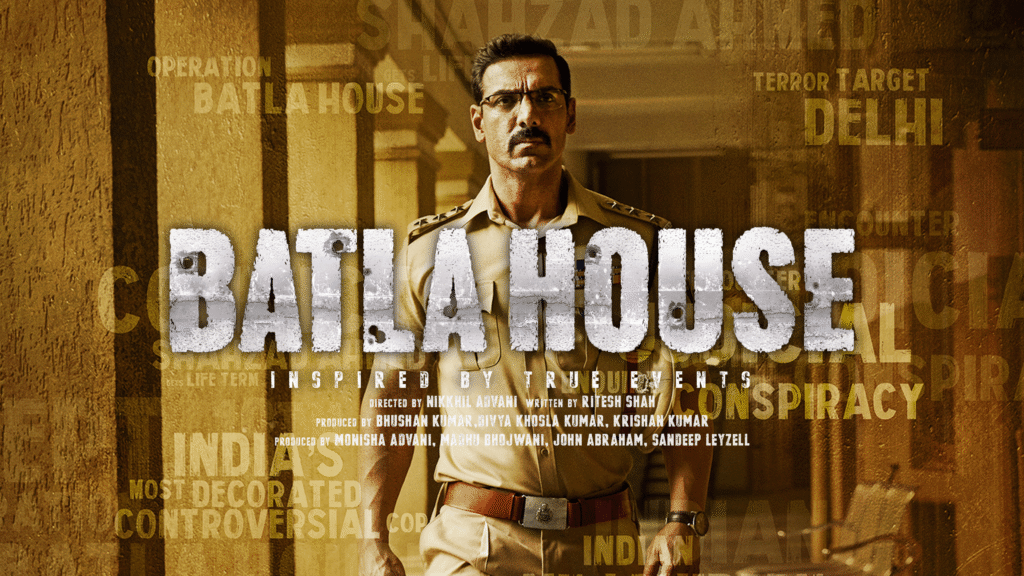
Batla House, directed by Nikkhil Advani and released on August 15, 2019, brings to screen one of India’s most controversial police encounters. This action thriller stars John Abraham as ACP Sanjay Kumar, a character inspired by real-life officer Sanjeev Kumar Yadav, who led the infamous Batla House encounter operation in Delhi on September 19, 2008.
The film tackles a sensitive subject that divided public opinion and sparked nationwide debates about fake encounters, terrorism, media trials, and police conduct. With tensions running high from the opening scene, Batla House attempts to present the police perspective on an operation that cost one officer’s life and left the nation questioning what really happened behind closed doors in that Okhla apartment.
Does this thriller succeed in balancing entertainment with the weight of real events? Let’s dive deep into this gripping police drama that kept audiences on the edge of their seats.
Plot Overview: From Encounter to Courtroom Drama
The narrative opens with a bang, literally. The opening starts with the encounter and the moment it begins, viewers’ eyes are glued to the screen. Set against the backdrop of serial blasts conducted by Indian Mujahideen across the country, the film follows ACP Sanjay Kumar as he deals with both professional crises and personal struggles.
After receiving intelligence that terrorists responsible for the September 13, 2008 Delhi blasts are hiding in apartment L-18 at Batla House in Okhla, the Delhi Police Special Cell conducts a raid. The operation results in a shootout where two suspects are killed, one is arrested, and Inspector K.K. Singh (based on the real officer Mohan Chand Sharma) loses his life in the line of duty.
The Aftermath and Public Scrutiny
What follows is perhaps more challenging than the encounter itself. The media, politicians, and public opinion turn against the police, labeling the operation as a staged fake encounter. Sanjay Kumar finds himself fighting on multiple fronts: proving the encounter’s legitimacy, dealing with post-traumatic stress disorder, salvaging his failing marriage with journalist wife Nandita, and hunting down the fugitives who escaped.
The second half focuses on Sanjay’s relentless pursuit of the escaped suspect Dilshad, taking him from Delhi to Nepal, while simultaneously battling courtroom proceedings where defense lawyer Shailesh Arya systematically dismantles his version of events.
Cast Performances: John Abraham Delivers Career-Best Work
John Abraham as ACP Sanjay Kumar
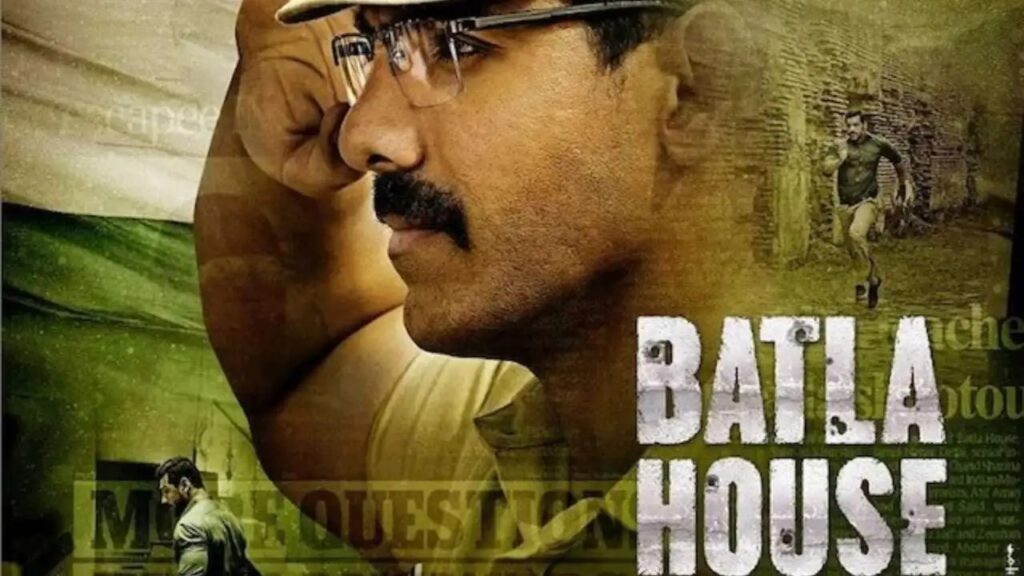
John Abraham delivers possibly his finest performance, playing not just a brave decorated police officer but also portraying a person abused and slammed from all quarters with no one willing to believe his version of truth. His restrained performance captures the internal turmoil of a cop dealing with PTSD, professional humiliation, and personal crisis.
Abraham’s physicality serves the role well, particularly during action sequences, but it’s his emotional vulnerability that truly impresses. The scenes where he grapples with trauma and self-doubt showcase an actor who has significantly evolved beyond his action hero persona.
Mrunal Thakur as Nandita Kumar
Mrunal Thakur plays Nandita, Sanjay’s journalist wife who stands by him despite their strained relationship. While the script doesn’t reveal much backstory for her character, she delivers a decent performance and impresses more in the second half as the woman who stands up for her husband. Her character represents the emotional anchor that keeps Sanjay grounded during his darkest moments.

Ravi Kishan as Inspector K.K. Singh
Ravi Kishan leaves a huge mark despite his small role, portraying the officer whose death becomes central to the controversy. His scenes carry emotional weight and authenticity that honor the real officer’s sacrifice.
Supporting Cast Excellence
Rajesh Sharma as defense lawyer Shailesh Arya delivers a scathing performance, embodying the opposition’s perspective with conviction. His courtroom confrontations with John Abraham crackle with tension.
Manish Chaudhari efficiently portrays Joint CP Jaivir Singh, representing the bureaucratic pressures faced by police officers.
Nora Fatehi appears in the remixed version of the chartbuster song “O Saki Saki,” which, while entertaining, feels somewhat disconnected from the film’s serious tone.
Technical Brilliance: Action That Keeps You Hooked
Direction and Screenplay
Nikkhil Advani, whose previous films received mixed responses, surprised audiences with his solid directorial work here. The director has done an impressive job, and Ritesh Shah’s screenplay is well thought out with some dialogues that will initiate claps among the audience.
The realistic approach adopted by the filmmakers makes the story feel authentic and believable. The use of archive footage adds documentary-style credibility to the narrative, grounding the fictional elements in historical reality.
Action Sequences and Cinematography
The encounter sequence itself is expertly choreographed and shot, creating genuine tension and excitement. The chase scene in Nizampur stands out with spectacular action, while the pre-capture sequence in Nepal maintains edge-of-your-seat suspense throughout.
Cinematographer Soumik Haldar captures the raw, gritty streets of Delhi with authenticity, while the action camerawork during intense sequences keeps viewers fully engaged.
Music and Songs
The soundtrack features compositions by Rochak Kohli, Tanishk Bagchi, Taz, and Ankit Tiwari. “O Saki Saki,” a remix of the 2004 hit from Musafir, became a chartbuster and generated significant buzz for the film. However, critics noted that songs sometimes disrupted the narrative flow and extended runtime unnecessarily.
The background score effectively heightens tension during action sequences and emotional moments, though the balance between intensity and melodrama occasionally tips too far toward the latter.

Pros: What Makes Batla House Compelling
Gripping Opening Sequence: The film hooks viewers immediately with its intense encounter sequence that sets the tone for the entire narrative.
John Abraham’s Career-Best Performance: His nuanced portrayal of a tortured cop dealing with trauma, public hatred, and self-doubt represents his finest acting work to date.
Important Social Commentary: The film effectively highlights how media trials and public opinion often rush to judgment without examining evidence, creating valuable dialogue about due process.
Authentic Approach: The use of real footage and realistic treatment lends credibility to the storytelling, making it feel like a docudrama rather than typical Bollywood masala.
Well-Written Courtroom Drama: The legal proceedings in the second half feature sharp dialogue and compelling arguments that keep viewers engaged.
Powerful Action Sequences: The encounter, chase scenes, and capture operation in Nepal are expertly choreographed and executed.
Explores Police Mental Health: The film deserves credit for addressing PTSD and the psychological toll of high-pressure law enforcement work, a topic rarely explored in Hindi cinema.
Cons: Where the Film Stumbles
Slow First Half Pacing: The pacing of the first half is somewhat slow but eventually picks up during the second half, which may test some viewers’ patience.
Excessive Length: At 146 minutes, the film feels stretched with unnecessary songs and melodramatic sequences that could have been trimmed for tighter storytelling.
One-Sided Narrative: The director’s unwillingness to question the ethical practices of Indian police makes Batla House a one-sided story, lacking the balanced perspective that such controversial material demands.
Underdeveloped Supporting Characters: Mrunal Thakur’s character particularly suffers from limited backstory and development, serving primarily as emotional support rather than having her own arc.
Patriotic Melodrama: The film feels burdened by its patriotic ambitions and sometimes lacks the subtlety needed for such complex subject matter.
Unnecessary Songs: While “O Saki Saki” became popular, its placement in the narrative feels forced and disrupts the film’s serious tone.
Questionable Dramatic Choices: Some courtroom scenes and confrontations veer into over-the-top territory, undermining the realistic approach established earlier.
Critical Reception and Box Office Success
Batla House received mixed-to-positive reviews from critics. Bollywood Hungama awarded it 4.5 stars out of 5, calling it one of the finest films of the year while praising performances, action sequences, and screenplay. Rotten Tomatoes shows a 38% critics rating but an impressive 88% audience score, indicating that viewers connected with the film more than professional critics.
Made on a budget of ₹56 crore, the film was a commercial success, grossing ₹113.38 crore worldwide. It collected ₹14 crore on its opening day and ₹43.5 crore during its opening weekend, performing well despite clashing with Akshay Kumar’s Mission Mangal on Independence Day.
The film found wider audiences when it became available on Amazon Prime Video in October 2019, allowing viewers who missed the theatrical release to experience this intense thriller.
Expert Analysis: Balancing Truth and Entertainment
From an E-E-A-T perspective, Batla House presents a challenging case study. The film claims to be inspired by true events but clearly takes a pro-police stance without adequately exploring counterarguments or ethical questions about encounter killings in India.
The film offers significant social commentary about media mentality and public opinion, highlighting how people form judgments based on one side of the story without examining the complete picture. This meta-commentary remains the film’s most valuable contribution to discourse around such controversial incidents.
The realistic treatment, use of archive footage, and attention to procedural detail demonstrate the filmmakers’ commitment to authenticity, even if the ideological perspective remains one-sided. For viewers seeking balanced journalism-style exploration of the case, the film may disappoint. However, as an emotional character study of a cop under siege, it succeeds admirably.
Conclusion: A Powerful But Polarizing Thriller
Batla House represents Nikkhil Advani’s return to form, delivering a taut thriller that keeps audiences engaged through most of its runtime. John Abraham provides career-best work, the action sequences satisfy, and the exploration of police mental health adds unexpected depth to familiar territory.
However, the film’s one-sided perspective on a deeply controversial case prevents it from achieving greatness. By refusing to engage seriously with criticisms of police conduct or present alternative viewpoints, Batla House becomes more propaganda than balanced cinema, even if technically accomplished and emotionally effective propaganda.
For entertainment purposes, the film succeeds. As a document exploring one of India’s most debated police operations, it falls short of the journalistic balance such material demands. Ultimately, Batla House works best when viewed as a character study of a cop under pressure rather than a definitive account of historical events.
Final Rating: 3.5/5 Stars
Recommendation: Stream on Amazon Prime Video for convenient viewing. Ideal for fans of action thrillers, police dramas, and John Abraham’s intense performances. Approach with awareness of the film’s ideological stance for a more informed viewing experience.