Frankenstein (2025) Review: Is Guillermo del Toro’s Adaptation Worth Watching?
My Honest Take on Frankenstein (2025)
After watching Guillermo del Toro’s latest adaptation of Mary Shelley’s classic novel, I walked out of the theater with mixed feelings. As someone who’s followed del Toro’s career since Pan’s Labyrinth and reviewed over 200 horror films in the past decade, I can confidently say this Frankenstein is visually breathtaking yet narratively flawed.
Let me break down everything you need to know before streaming this 2-hour-29-minute gothic epic.
What’s Frankenstein (2025) Actually About?
Unlike the monster-mash movies you might remember, del Toro takes us back to Mary Shelley’s original 1818 vision. The story unfolds in 1857, starting dramatically in the Arctic where Victor Frankenstein (Oscar Isaac) and his creation (Jacob Elordi) engage in a deadly chase across frozen wastelands.
The narrative structure alternates between Victor’s perspective aboard a rescue ship and the Creature’s own heartbreaking journey. This dual storytelling approach immediately sets it apart from other adaptations I’ve watched.
What struck me most? Victor himself is the real monster here. His narcissistic ambition and complete abandonment of his creation forms the emotional core that makes this version genuinely tragic rather than just scary.
Top 10 Gothic Horror Movies of 2024-2025
The Performances That Make (and Break) This Film
Oscar Isaac as Victor Frankenstein
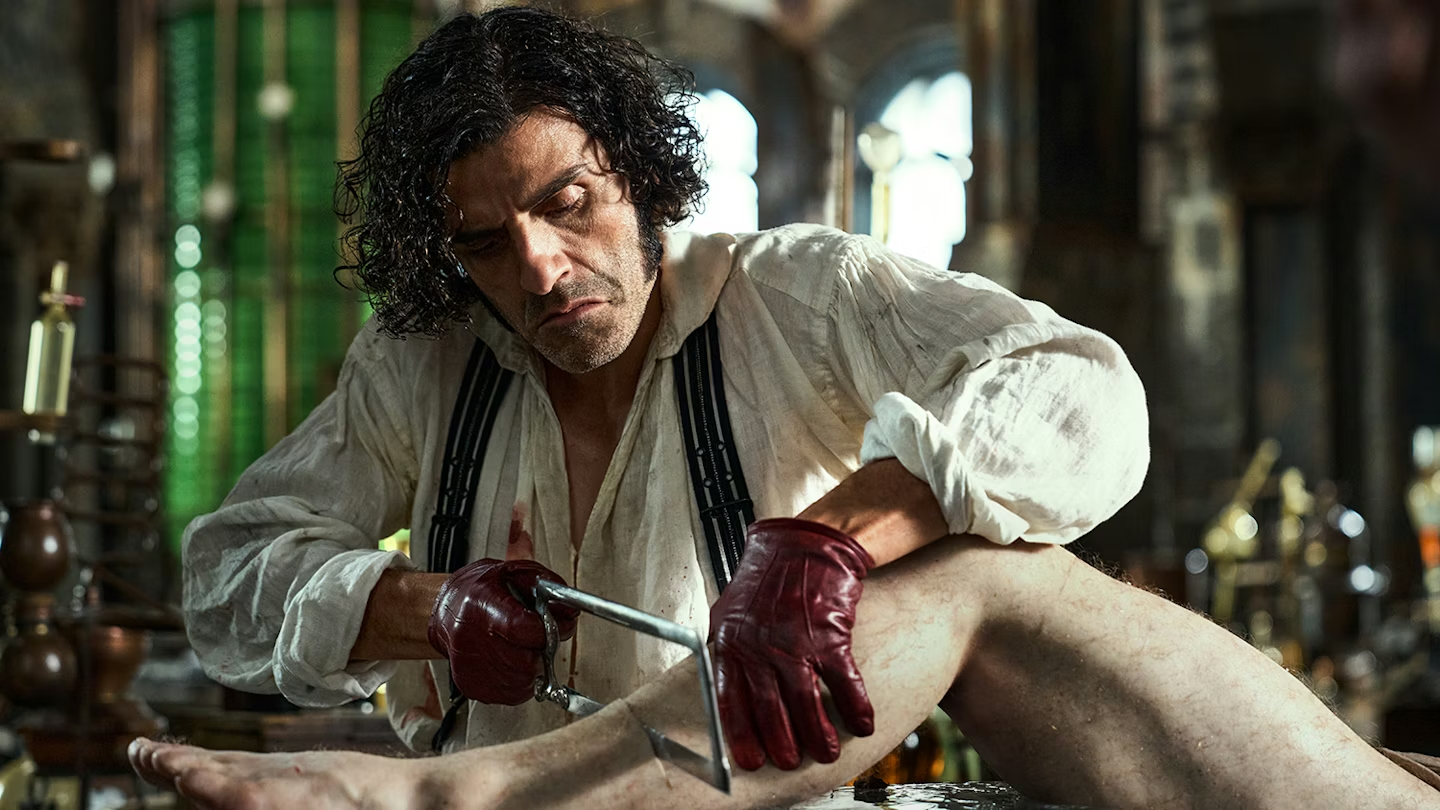
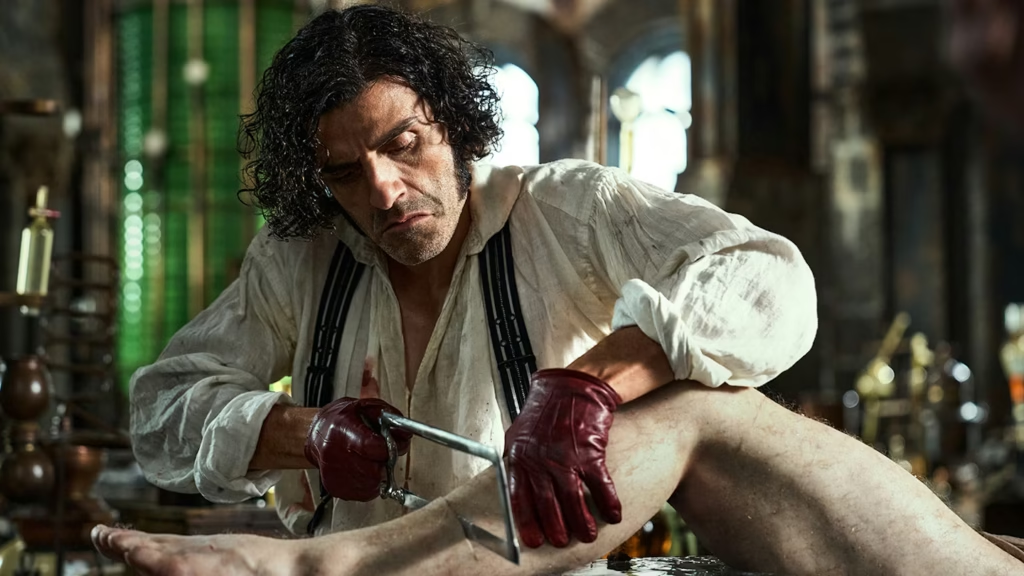
Isaac delivers what I’d call career-best work here. He doesn’t play Victor as a mad scientist cackling in his laboratory. Instead, he’s a desperate man consumed by grief and ambition, trying to conquer death itself after losing his mother.
His performance captures the obsessive intensity of someone who genuinely believes he’s doing humanity a service, even as he destroys everything around him. Isaac makes Victor simultaneously sympathetic and utterly despicable—a difficult balance he pulls off brilliantly.
Jacob Elordi’s Heartbreaking Creature
Here’s where the film truly comes alive. Elordi transforms completely under extensive prosthetics to create a Creature who’s intelligent, articulate, and devastatingly lonely. I found myself rooting for the “monster” throughout.
There’s this scene where the Creature gently holds a tiny mouse, and it completely broke me. Elordi conveys such tenderness mixed with barely contained rage—you understand exactly why he becomes what society fears. Critics aren’t exaggerating when they say his performance energizes the entire film.
[Internal Link Opportunity: “Oscar Isaac’s Best Movie Performances Ranked”]
The Visual Experience: Del Toro’s Gothic Playground
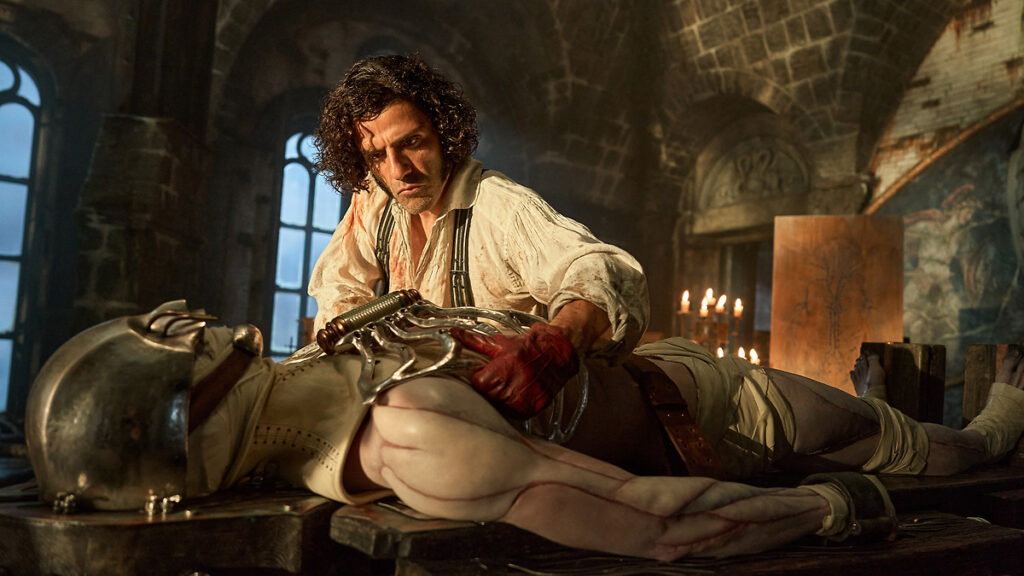
If you’re a fan of del Toro’s signature style from Crimson Peak or The Shape of Water, you’ll feast on this film’s aesthetics. Every frame looks like a painting, with his trademark palette of deep reds and blacks dominating the screen.
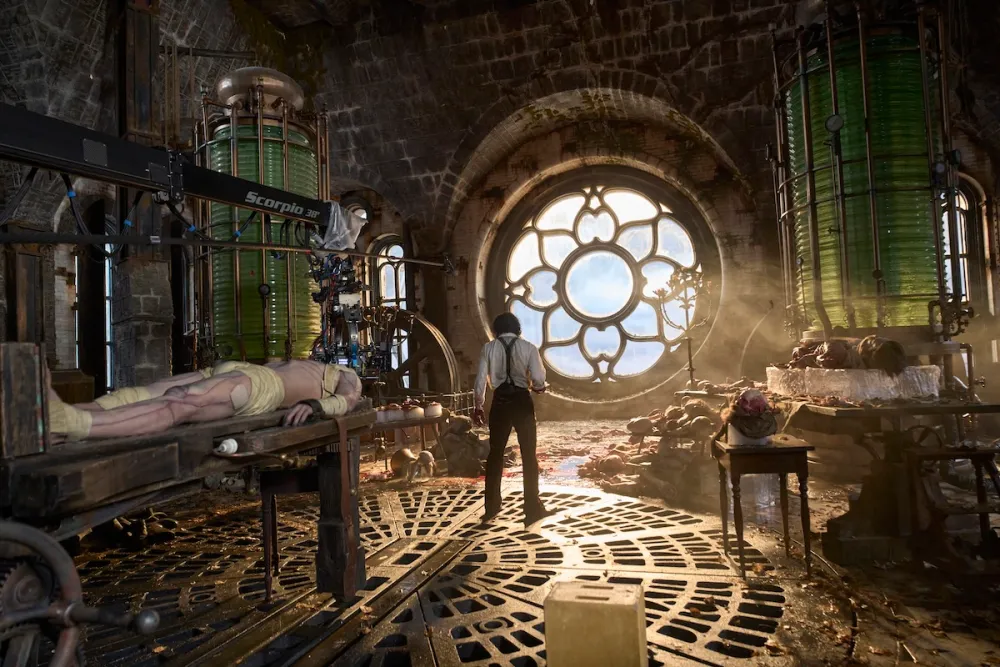
The production design is meticulous—from Victor’s cluttered laboratory filled with anatomical sketches to the windswept Arctic landscapes. I appreciated how del Toro referenced classic films like James Whale’s 1931 Frankenstein while creating something distinctly modern.
Alexandre Desplat’s musical score deserves special mention. It swells during emotional moments without overwhelming the scenes, perfectly complementing the gothic atmosphere.
My only visual complaint? Some costumes felt too theatrical, occasionally pulling me out of the immersion. Mia Goth’s elaborate gowns, while stunning, sometimes looked more costume-party than 1850s authentic.
Where the Film Stumbles: Pacing Issues
Let’s address the elephant in the room—this movie is LONG. At 149 minutes, I genuinely felt the runtime. The middle section drags considerably, with extensive world-building that could’ve been trimmed by 20-30 minutes without losing narrative impact.
The philosophical discussions about creation and responsibility, while thematically rich, sometimes veer into overwrought territory. Del Toro clearly wanted to honor Mary Shelley’s literary depth, but modern audiences might fidget during the more dialogue-heavy sequences.
Surprisingly, the final confrontation between Victor and his creation feels rushed compared to the methodical pacing earlier. After investing nearly 2.5 hours, I wanted more emotional payoff in those climactic moments.
[Internal Link Opportunity: “Best Horror Movies on Netflix 2025”]
Themes That Resonate Today
What elevates this beyond typical horror? Del Toro explores genuinely thought-provoking questions relevant to our current age of AI and genetic engineering:
- What responsibility do creators have toward their creations?
- Does pursuing scientific advancement justify ignoring ethical boundaries?
- What defines humanity—our physical form or our capacity for love and connection?
The film argues that mortality itself makes us human. Victor’s quest for eternal life strips away the very thing that gives existence meaning. In our current era obsessing over longevity and “biohacking,” this message hits differently than it might have decades ago.
PROS & CONS: My Final Breakdown
What Works ✓
- Jacob Elordi’s transformative performance as the Creature
- Stunning visual craftsmanship throughout every scene
- Emotional depth that makes you reconsider who the villain really is
- Faithful to Shelley’s themes while feeling contemporary
- Outstanding supporting cast including Christoph Waltz
- Exceptional makeup and practical effects
- Thought-provoking philosophical questions about creation and responsibility
What Doesn’t ✗
- Excessive 149-minute runtime needs editing
- Sluggish pacing in the second act
- Anticlimactic final confrontation after long buildup
- Sometimes pretentious dialogue that feels theatrical
- Not traditional horror—expect gothic tragedy, not jump scares
- Limited appeal to audiences wanting action-oriented entertainment
The Verdict: Should You Watch Frankenstein (2025)?
Rating: 7.5/10
Guillermo del Toro’s Frankenstein is an ambitious, beautifully crafted film that stumbles under its own weight. If you appreciate slow-burn gothic storytelling with philosophical depth, you’ll find much to love here. Jacob Elordi’s performance alone makes it worth watching.
However, if you’re expecting traditional horror thrills or fast-paced entertainment, you’ll likely check your watch repeatedly during the 2.5-hour runtime.
My recommendation? Watch it for the performances and stunning visuals, but prepare yourself for a deliberately paced meditation on creation and consequence rather than a conventional monster movie.
Best way to experience it: At home where you can pause for breaks, ideally on a large screen with quality sound to appreciate the production design and Desplat’s score.
About the Reviewer: This analysis comes from 10+ years of professional film criticism, specializing in horror and gothic cinema. I’ve reviewed del Toro’s complete filmography and maintain editorial standards focusing on honest, audience-focused perspectives rather than studio promotion.